
Growing Language in Everyday Routines
As a speech-language pathologist (SLP), I often remind families that the best language learning doesn’t happen at a table or during “practice time” — it happens during everyday routines. Bath time, brushing teeth, and getting dressed are moments you already share with your child every day, making them powerful opportunities to build communication skills naturally.
Below are simple, effective ways to support your child’s language development during these familiar routines.
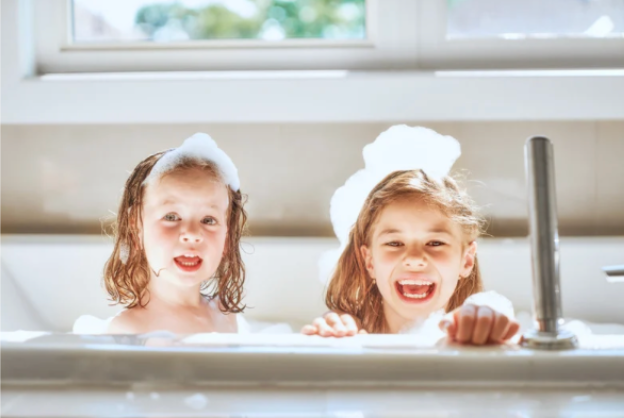
1. Bath Time: A Language-Rich, Low-Pressure Environment
Bath time is naturally calming, playful, and sensory-rich — ideal for language learning.
How to Support Language During Bath Time:
Narrate what you see and do
Use short, simple sentences:
“Water on.” “Wash your arms.” “Splash, splash!”Label body parts and actions
“Feet.” “Knees.” “Pour.” “Squeeze.”Offer choices
“Do you want the blue cup or the yellow cup?”
Choices encourage your child to respond verbally or nonverbally.Model descriptive words and simple phrases
“Warm water.” “Big bubbles.” “Slippery soap.”Sing or chant
Songs and rhythms support speech, sequencing, and attention.
Example: “Row, Row, Row Your boat” or “Baby Shark”
Tip from an SLP: Repetition is a good thing. Using the same words every night helps children learn and retain new language.
2. Brushing Teeth: Short Routines = Big Communication Wins
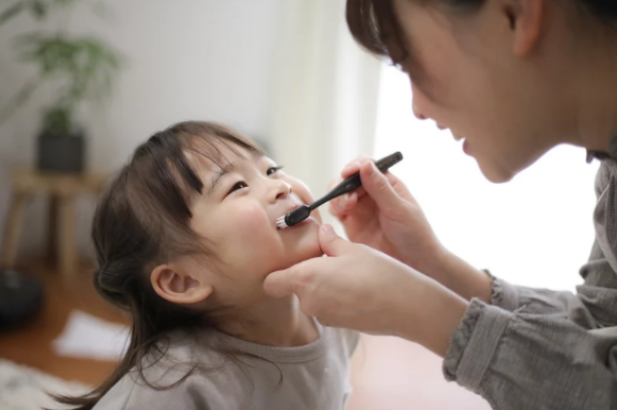
Tooth brushing may be quick, but it happens at least twice a day, which means twice-daily language exposure.
Language Strategies for Tooth Brushing:
Model predictable phrases
“Brush up.” “Brush down.” “Spit.” “All clean!”Sing or chant
Songs and rhythms support speech, sequencing, and attention.
Example: “Brush, brush, brush your teeth…” to the tune of “Row Row Row Your Boat”Talk about sequencing
“First toothpaste, then brush, last rinse.”Offer choices
“Do you want the red or blue brush?” “Strawberry or mint toothpaste?”Use mirrors for sound practice
Let your child watch their mouth move while making sounds or silly faces.Celebrate attempts, not perfection
If your child approximates a word, respond positively. It doesn’t need to sound perfect:
“Yes! Brush!”
3. Getting Dressed: Built-In Opportunities for Vocabulary and Choices
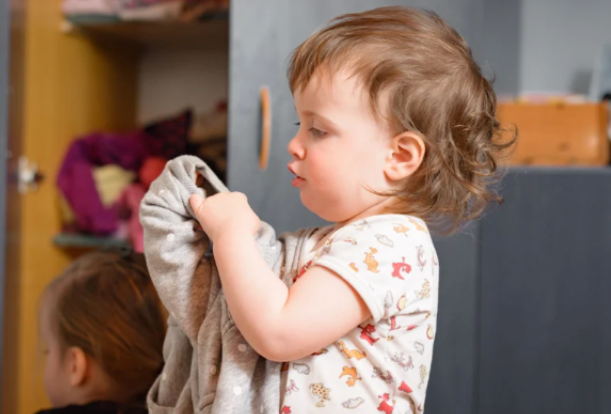
Getting dressed offers countless chances to work on language while supporting independence.
Language-Building Ideas While Getting Dressed:
Offer meaningful choices. This encourages pointing and expressive language.
“Do you want to wear the red or blue shirt?” “Unicorn or pony dress?”
Label clothing items to teach vocabulary or descriptive concepts:
“Shirt, pants, socks, shoes” or “wet shirt,” “small shoes,” “round button,” “broken zipper”
Use action words to teach verbs:
“Put on,” “Take off,” “Zip up,” “Botton”
Use predictable phrases and songs. This helps your child to put context to new vocabulary and gives opportunity for them to fill-in-the-blank!
“This is the Way we Put on our Shoes” or “Put your left arm in… Put your right leg in”
Teach functional phrases. Giving your child extra time getting dressed and allowing them to try the tricky tasks like buttons and socks creates opportunities for them to learn helpful phrases like "help please" or “my turn”.
Getting a young child dressed brings about lots of emotions and can highlight sensory differences. Name them and use the moment to teach your child ways to cope.
“You’re feeling frustrated, socks are tricky.” or “These pants are too tight, let’s change.”
Encourage requests. Pause and wait for your child to request help or an item — verbally, with gestures, or using a communication system.
Why These Routines Matter
Children learn language best when:
They feel safe and relaxed
Language is modeled repeatedly
Communication happens naturally throughout the day
By focusing on language in routines you already do, you are helping your child practice communication in meaningful, real-life situations — exactly how speech and language are meant to be used.
A Final Encouragement
You do not need to be a speech therapist to support your child’s communication. Your voice, your presence, and your everyday interactions matter more than any worksheet ever could.
If you have concerns about your child’s speech, language, or feeding skills, Turning Tides Speech Therapy provides in-home evaluations and treatment therapy with a speech-language pathologist who can provide personalized strategies tailored to your child and family routines. Reach out today to set up a free consultation with us to begin the process!